
The honest bottom line
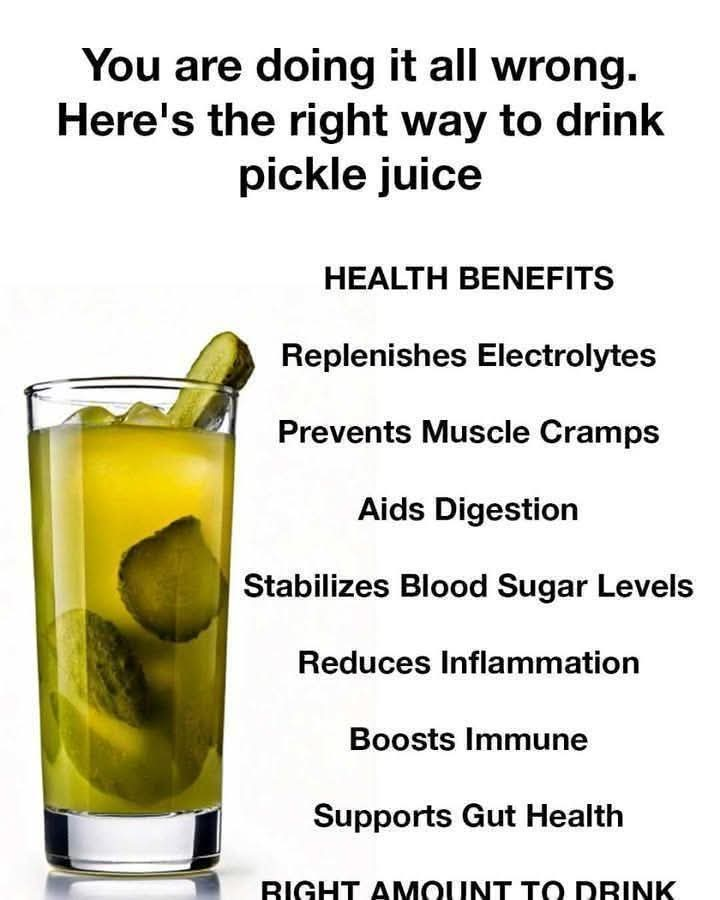
Pickle juice can be useful in very specific situations (mainly cramps and electrolyte replacement), but it is not a daily wellness tonic. Most benefits are conditional, limited, or overstated.
What’s actually supported by evidence ✅
1. Electrolyte replacement (situational)
- Pickle juice is very high in sodium.
- Helpful after heavy sweating (endurance athletes, heat exposure).
- Not a balanced electrolyte drink (low potassium, no carbs).
Use case: intense exercise, not casual hydration.
2. Muscle cramp relief (real, but misunderstood)
- Research shows pickle juice can stop cramps within minutes.
- This happens too fast to be electrolyte replacement.
- The effect is likely due to vinegar triggering a neural reflex that calms overactive motor neurons.
Key point: it treats cramps, it doesn’t prevent them long-term.
3. Blood sugar response (vinegar effect)
- Vinegar can modestly improve post-meal glucose response.
- This applies to small amounts, taken before or with meals.
- It’s not a diabetes treatment, just a mild aid.
What’s exaggerated or misleading ❌
❌ “Aids digestion”
- Vinegar does not meaningfully “boost digestive enzymes.”
- For some people, it worsens acid reflux or gastritis.
- No evidence it improves nutrient absorption.
❌ “Reduces inflammation”
- Pickle juice itself is not anti-inflammatory.
- High sodium intake can actually increase inflammatory markers in some people.
❌ “Boosts immune system”
- Garlic/dill in trace amounts ≠ immune booster.
- No evidence pickle juice improves immune function.
❌ “Packed with antioxidants”
- Pickle juice contains minimal antioxidants.
- The pickles themselves have more than the brine.
❌ “Supports gut health” (important clarification)
This is only true if:
- The pickles are naturally fermented
- The brine is unpasteurized
- No vinegar was added
Most store-bought pickles do NOT qualify.
Vinegar-based pickle juice:
- ❌ No probiotics
- ❌ No gut-colonizing bacteria
The real risks people ignore ⚠️
Sodium overload
1–2 oz of pickle juice can contain:
- 300–600+ mg sodium
Daily use may worsen:
- High blood pressure
- Bloating and water retention
- Kidney strain
- Acid reflux
Who should NOT drink pickle juice regularly
Avoid or limit if you have:
- Hypertension
- Kidney disease
- Heart disease
- Acid reflux / GERD
- A low-sodium diet
The right way to use pickle juice
If you’re going to use it, do it strategically, not habitually:
✅ For muscle cramps:
1–2 oz only when cramps occur
✅ After extreme sweating:
Occasional small dose + water
✅ For blood sugar:
1 tablespoon vinegar-based juice with meals, not randomly
❌ Not a daily morning or nighttime drink
❌ Not for “detox,” immunity, or gut healing
Better alternatives (depending on your goal)
- Hydration: balanced electrolyte drinks or coconut water (diluted)
- Gut health: fermented foods (kimchi, kefir, sauerkraut)
- Blood sugar: fiber, protein timing, walking after meals
- Cramps: magnesium, adequate hydration, proper conditioning
Final verdict
Pickle juice is a tool, not a tonic.
Used occasionally and purposefully? ✔️
Marketed as a daily wellness hack?CategoriesUncategorized